
Popular Handmade Mahisasurmardini Bengali Durga Murti Idols
Bengali Durga idols are traditionally handcrafted in a variety of materials, including clay, terracotta, stone, metal, sholapith, marble dust and wood, with each form reflecting the artistic traditions and cultural heritage of Bengal. This blog explores the different popular handmade Mahisasurmardini Bengali Durga murti idols and the craftsmanship behind these sacred representations of Maa Durga so that you can precisely decide which one is yours.
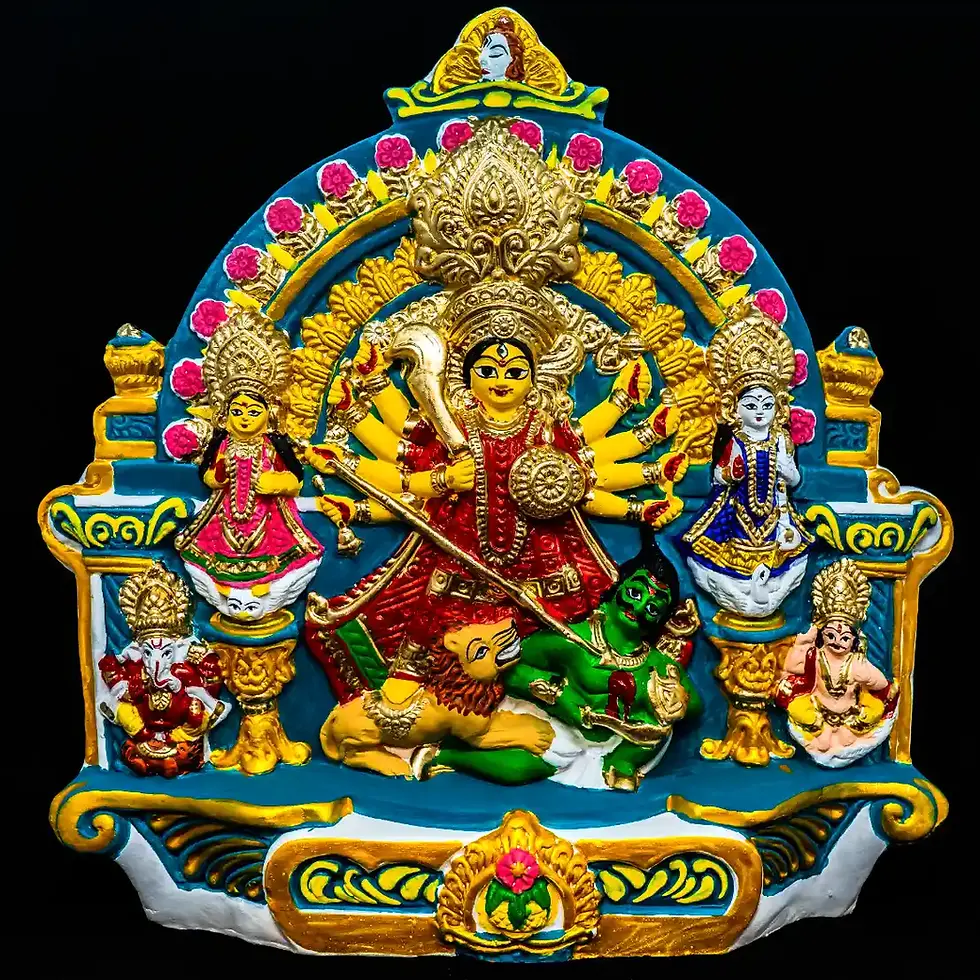
Kumartuli Clay Mahisasurmardini Bengali Durga Murti :
Kumartuli has a centuries-old idol-making tradition — the clay idol-making craft of this North Kolkata neighbourhood has been practised for more than 250 years and has become closely associated with Bengali Durga Puja.
The idols begin with a simple natural framework — artisans first create the basic structure using bamboo and straw, over which layers of clay are carefully applied to form the body and features of Maa Durga.
The clay has a special connection with the Hooghly region — Ganga mati, or clay associated with the Hooghly river basin, is traditionally used and is kneaded and prepared to achieve the required consistency before sculpting.
The craft is largely passed down through generations — many Kumartuli idol makers belong to the Pal artisan community, where knowledge of clay modelling, shaping, painting and decoration has traditionally been learned within families.
Traditional Kumartuli idols can feature the distinctive Ek Chala style — in this arrangement, Durga and her four children are presented together within a single backdrop.
Read more here
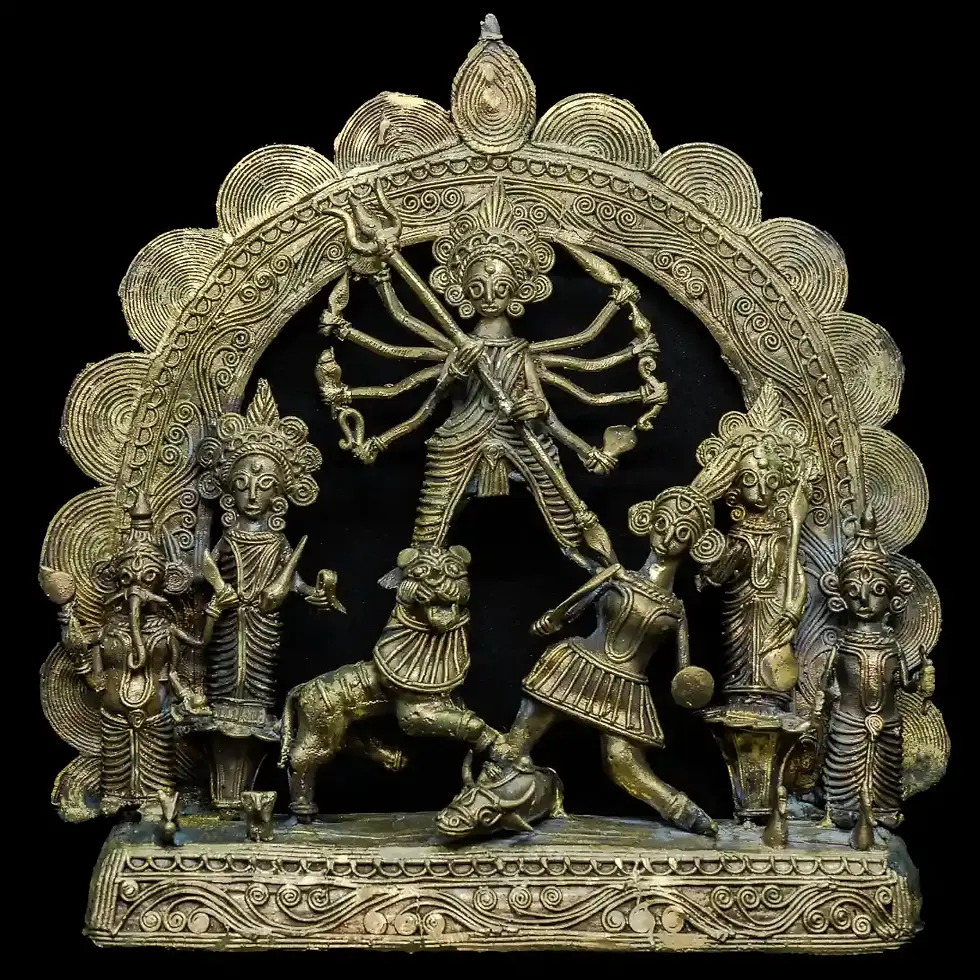
Dokra Brass Metal Mahisasurmardini Bengali Durga Murti :
Dokra Durga is made through lost-wax casting — Unlike clay Durga idols, Dokra Durga figures are cast in non-ferrous metal using the traditional cire perdue, or lost-wax, technique. The process involves creating the form in wax, covering it with clay and replacing the melted wax with molten metal.
Every Dokra Durga can be slightly different — The clay mould is broken open after casting, meaning the same mould cannot simply be reused. This gives individually cast Dokra figures their distinctive variations and handmade character.
Durga is part of the wider Dokra tradition of religious figures — Dokra artisans have traditionally created representations of gods and goddesses, and documented collections include religious figurines from West Bengal and other parts of India.
The craft has very old roots in Indian metalworking — The National Crafts Museum describes Dokra as a non-ferrous metal-casting tradition using lost-wax casting that has been practised in India for more than 4,000 years.
Read more here
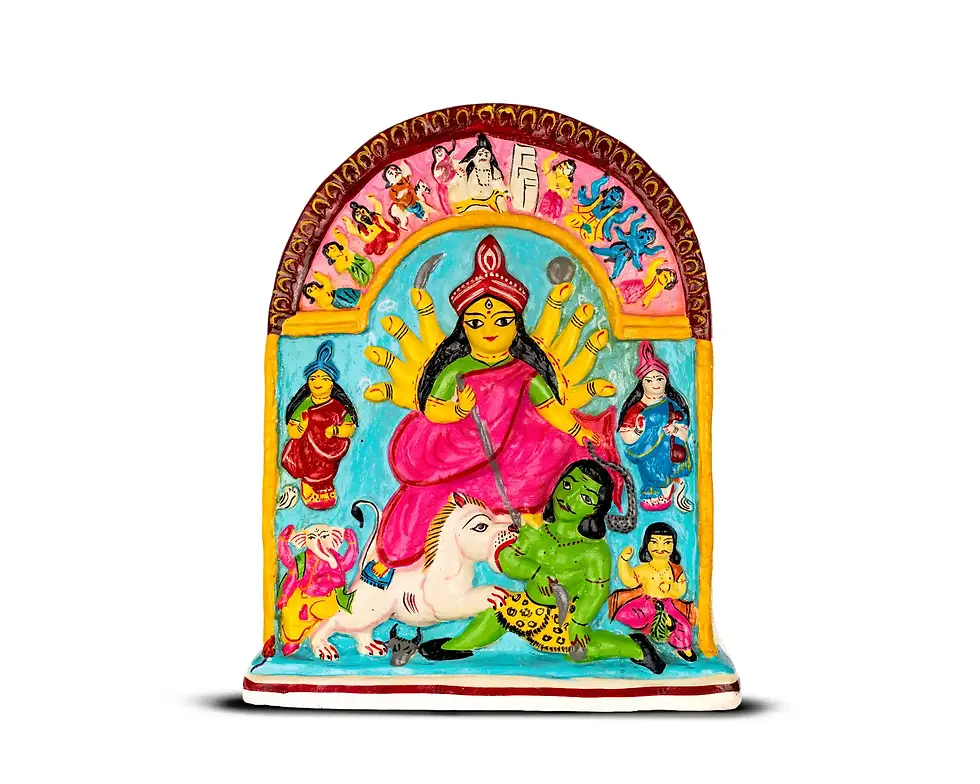
Jaynagar–Majilpur Clay Mahishasuramardini Durga Murti :
It's a story telling art.
The Jaynagar–Majilpur clay Durga Murti or dolls belongs to a distinctive folk-art tradition of South 24 Parganas, West Bengal. The region is particularly known for its colourful moulded clay dolls, a tradition documented as being around 250 years old. This is a must collect Bengal art work.
Read more here
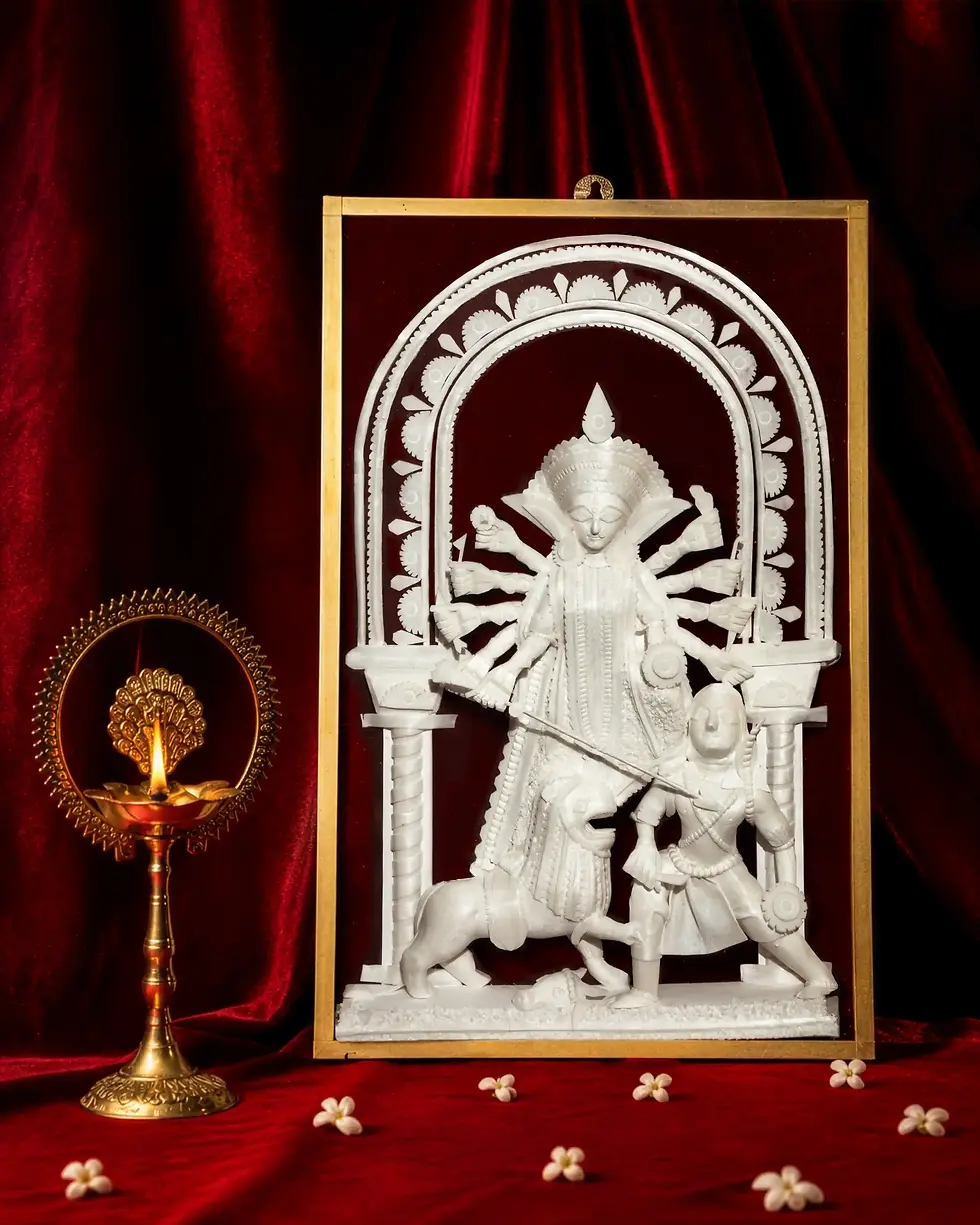
Sholapith Mahishasuramardini Durga Murti :
Sholapith is a natural plant material — Shola, often called the “Indian cork,” is a soft, lightweight, milky-white material obtained from the inner part of the Aeschynomene plant, which grows in wetland areas of Bengal and eastern India.
Sholapith is closely connected with Bengali Durga Puja — Sholapith is traditionally used for decorating Durga idols, including crowns, ornaments and other intricate elements. It is also widely used in the decoration of Durga Puja pandals.
The craft requires extremely delicate carving — Because shola is soft and lightweight, artisans can cut and carve it into remarkably fine floral and decorative patterns using simple hand tools. The traditional craftsmen associated with this work are known as Malakars.
The natural white colour has cultural significance — Sholapith's naturally pale, almost ivory-white appearance is one reason it has traditionally been associated with purity and sacredness. Shola ornaments are used not only for Durga Puja but also in Bengali weddings and other religious rituals.
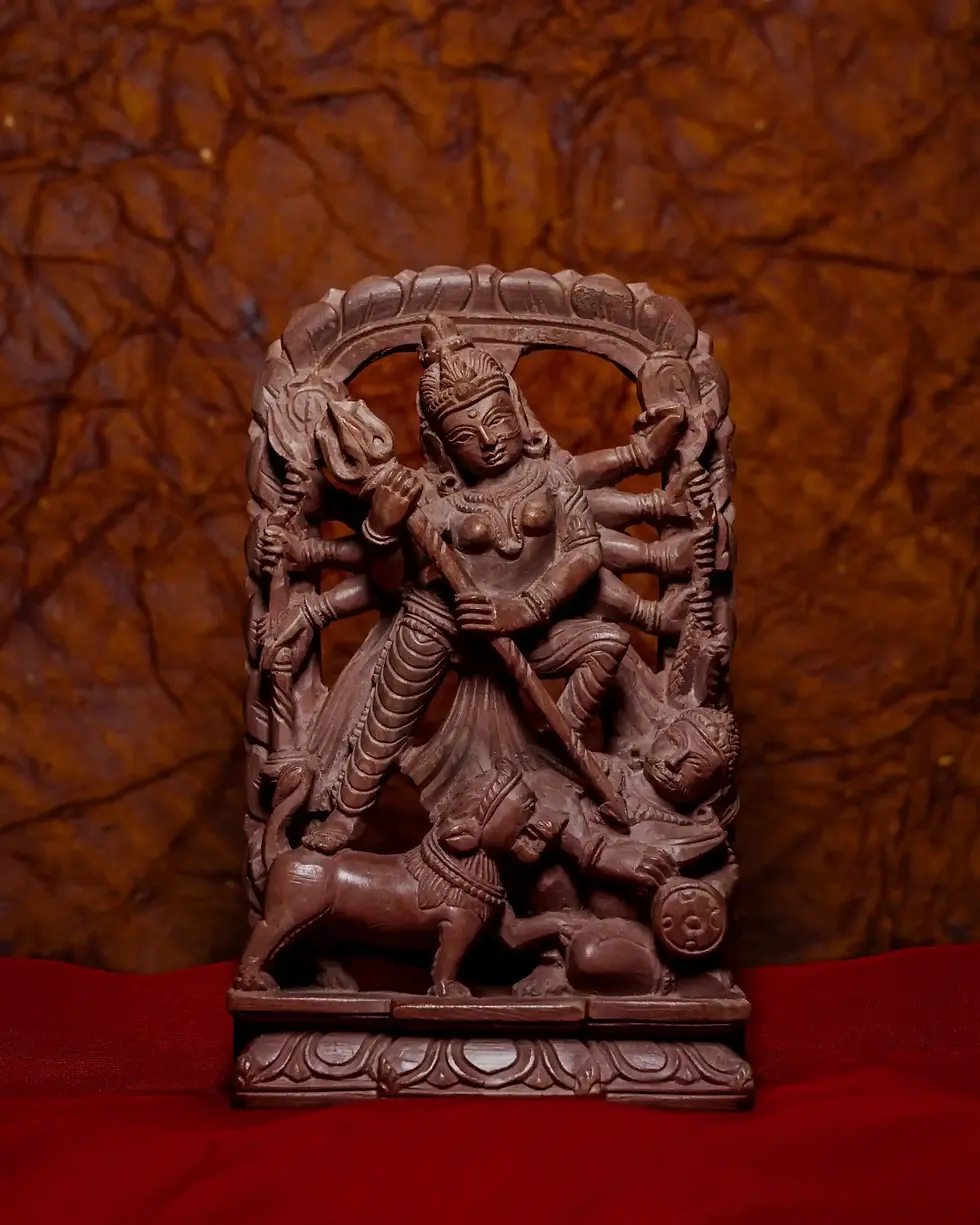
Indian Sone Sculpture of Mahishasuramardini Durga
Hand-sculpting makes every piece distinctive — Unlike moulded or cast figures, a hand-carved stone Durga Murti develops its form through the individual decisions and techniques of the sculptor, making details such as facial expression and ornaments unique.
Durga sculptures have a long history in Indian temple art — Representations of Mahishasuramardini appear in Indian temple sculpture across different regions and periods, demonstrating how the story of Durga's victory has been expressed through diverse local artistic traditions and Bengal isn't and exception. Sculptors traditionally work directly on materials such as sandstone, granite, basalt and other regional stones, gradually removing material to reveal the figure.
Natungram Wooden Mahishasuramardini Durga Murti :
Natungram is a traditional wood-carving village in West Bengal — Located in Purba Bardhaman district, Natungram is particularly known for its distinctive wooden dolls and religious figures.
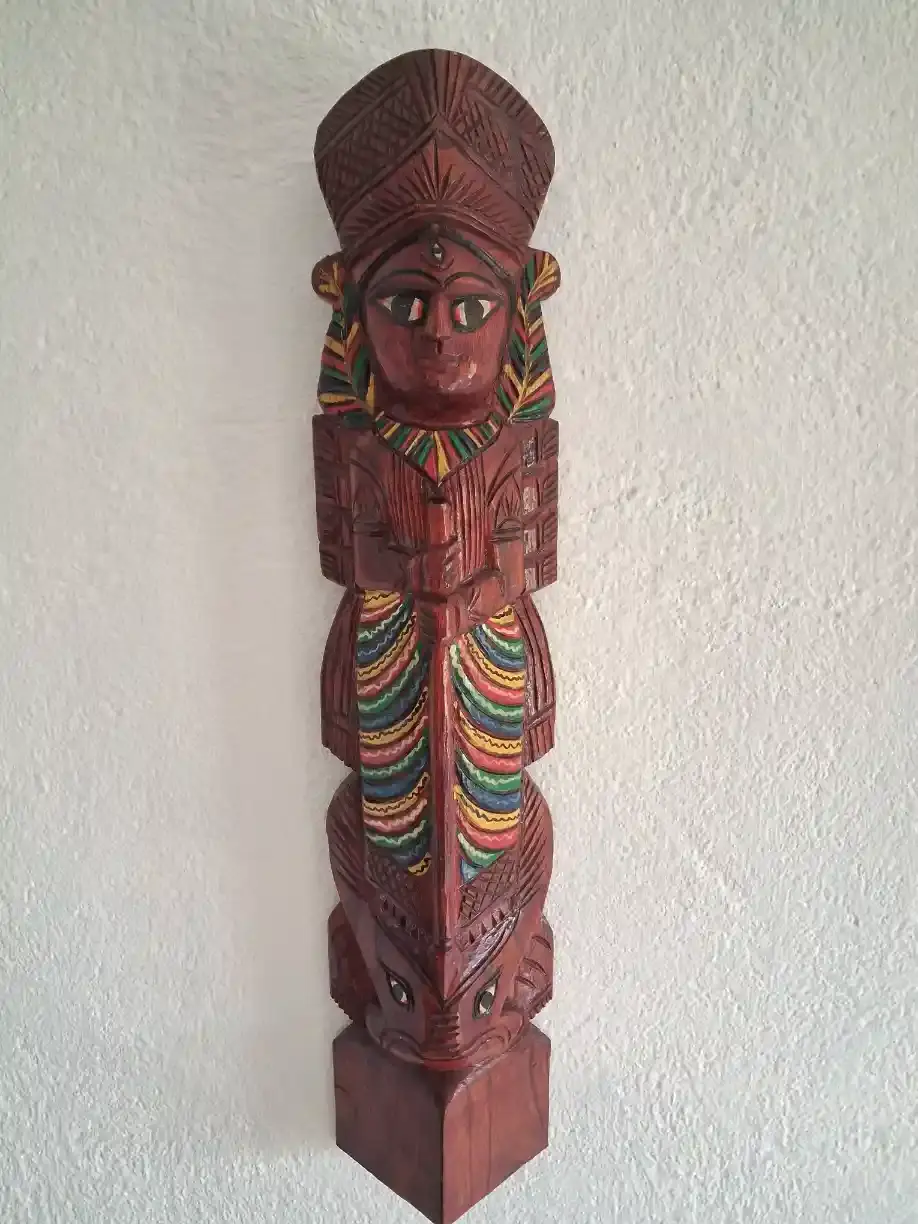
Durga is part of the village's traditional wooden repertoire — Alongside popular figures such as the Goddess Lakshmi, Krishna, owls and other folk figures, artisans also create wooden representations of Hindu deities including Durga.
The craft is closely associated with traditional artisan families — Wood carving in Natungram has been passed down through generations, with skills traditionally learned within artisan households.
The characteristic Natungram style is highly recognisable — Figures generally have simplified forms, expressive faces and bold shapes. The sculptures are carved and then painted, combining three-dimensional wood carving with colourful folk-art decoration.
Natungram woodcraft has a strong connection with Bengal's folk culture — The village's wooden figures are not simply decorative objects; many depict deities, animals and characters associated with Bengali religious and cultural traditions, making the craft an important part of Bengal's folk-art heritage.
For Every Bengali Maa Durga is not just a goddess , she is the favourite daughter of the family and everybody egarly waits for her arrival durging Durga Puja.
Bengali Durga Puja is a vibrant celebration of Goddess Durga, bringing together devotion, art, music, and community spirit. From beautifully crafted idols to grand pandals and traditional rituals, it reflects the rich cultural heritage of Bengal.


Comments